


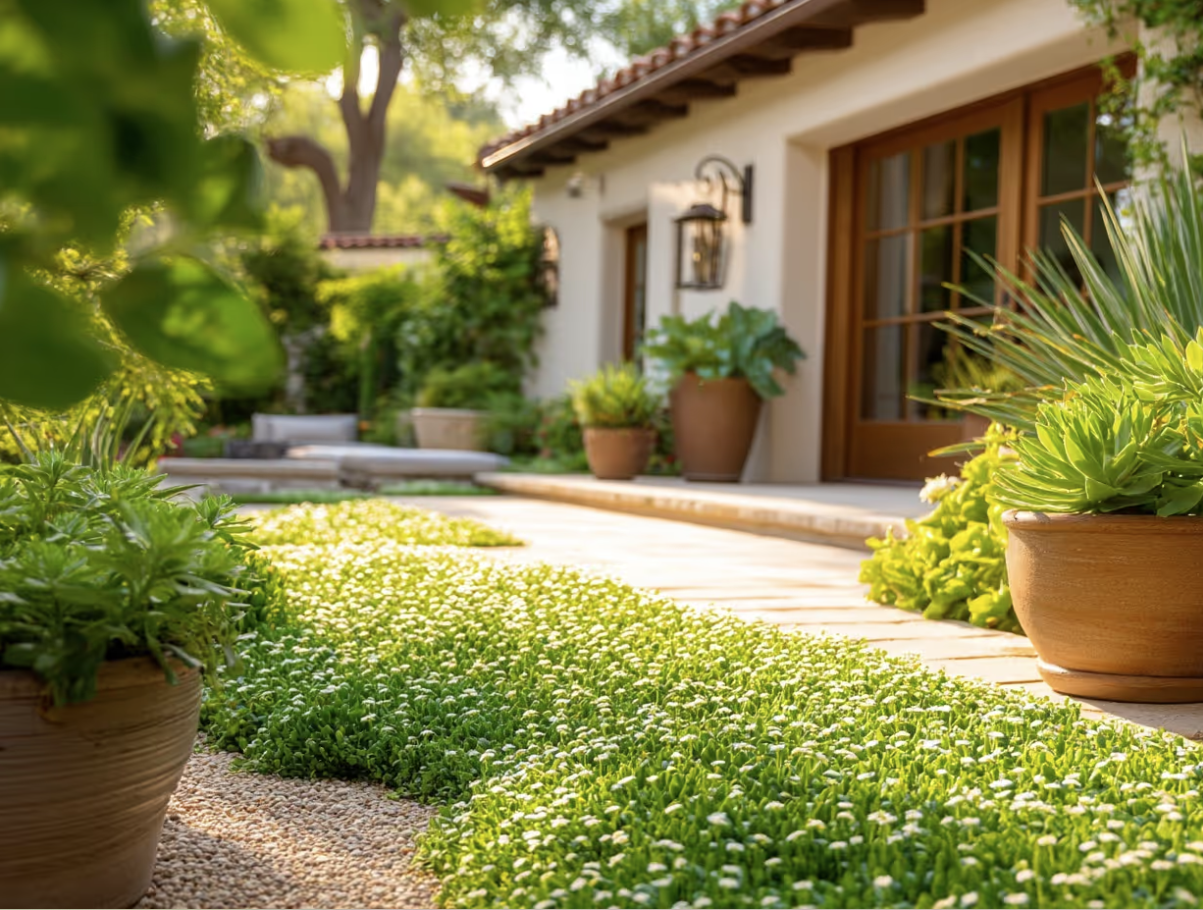
Ground cover plants: beautiful alternatives that thrive without a lawn
Ground cover plants replace traditional lawns with beautiful, low-maintenance surfaces that save water and skip the mower in Southern California. While traditional lawns demand constant watering, weekly mowing, and regular fertilizing just to stay green in Southern California's Mediterranean climate, ground cover plants do the opposite. They spread, they bloom, they fill in. They ask for very little and give back a landscape that feels intentional, beautiful, and unmistakably yours.
Whether you are replacing an entire lawn, filling gaps between stepping stones, or covering a slope that has always been difficult to maintain, this guide walks through the best ground cover plants for Southern California yards. You will learn which varieties handle full sun, which thrive in shade, which ones you can actually walk on, and how to plant them for success. By the end, you will have a clear plan for creating a living landscape and everything you are looking for in your Yardtopia.
Key takeaways
—Ground cover plants replace traditional lawns with living, low-maintenance surfaces that never need mowing and use a fraction of the water that turf grass demands in Southern California's climate.
—Southern California's USDA zones 9b through 10b support dozens of gorgeous ground covers that thrive on minimal irrigation, offering year-round color, texture, and even fragrance.
—The best ground cover for your yard depends on three factors: sun exposure, how much foot traffic the area receives, and the look you want to create.
What are ground cover plants and why are they better than grass?
Ground cover plants are low-growing species that spread horizontally to form a dense, continuous mat across the soil surface. They typically stay under six inches tall, require no mowing, and serve the same visual role as a lawn: creating a cohesive green (or colorful) surface that ties a landscape together. The difference is that ground covers accomplish this while using significantly less water, requiring far less maintenance, and offering far more visual interest than a single species of turf grass.
For Southern California homeowners, the case for ground covers over traditional lawns is especially compelling. Turf grass accounts for 50 to 70 percent of residential water use in this region, and most of that water goes to maintaining a front yard that the average homeowner uses less than ten minutes per week. Ground cover plants, by contrast, typically need 50 to 75 percent less irrigation once established. Many are California natives that evolved to thrive in exactly these conditions: hot, dry summers and mild, wet winters.
Beyond water savings, ground cover plants deliver benefits that grass simply cannot match. Many varieties bloom with seasonal flowers. Some release fragrance when walked on. Others suppress weeds so effectively that you spend less time on maintenance overall. And unlike a lawn, which looks essentially the same from one yard to the next, ground covers let you create a landscape with genuine character and texture.
Ground cover plants are not just for replacing entire lawns. They excel in areas where grass struggles: steep slopes, narrow strips between the sidewalk and street, shady patches under trees, and gaps between pavers or stepping stones. Starting with one of these challenging spots is a great way to experiment before committing to a larger area.
How do you plant ground cover successfully?
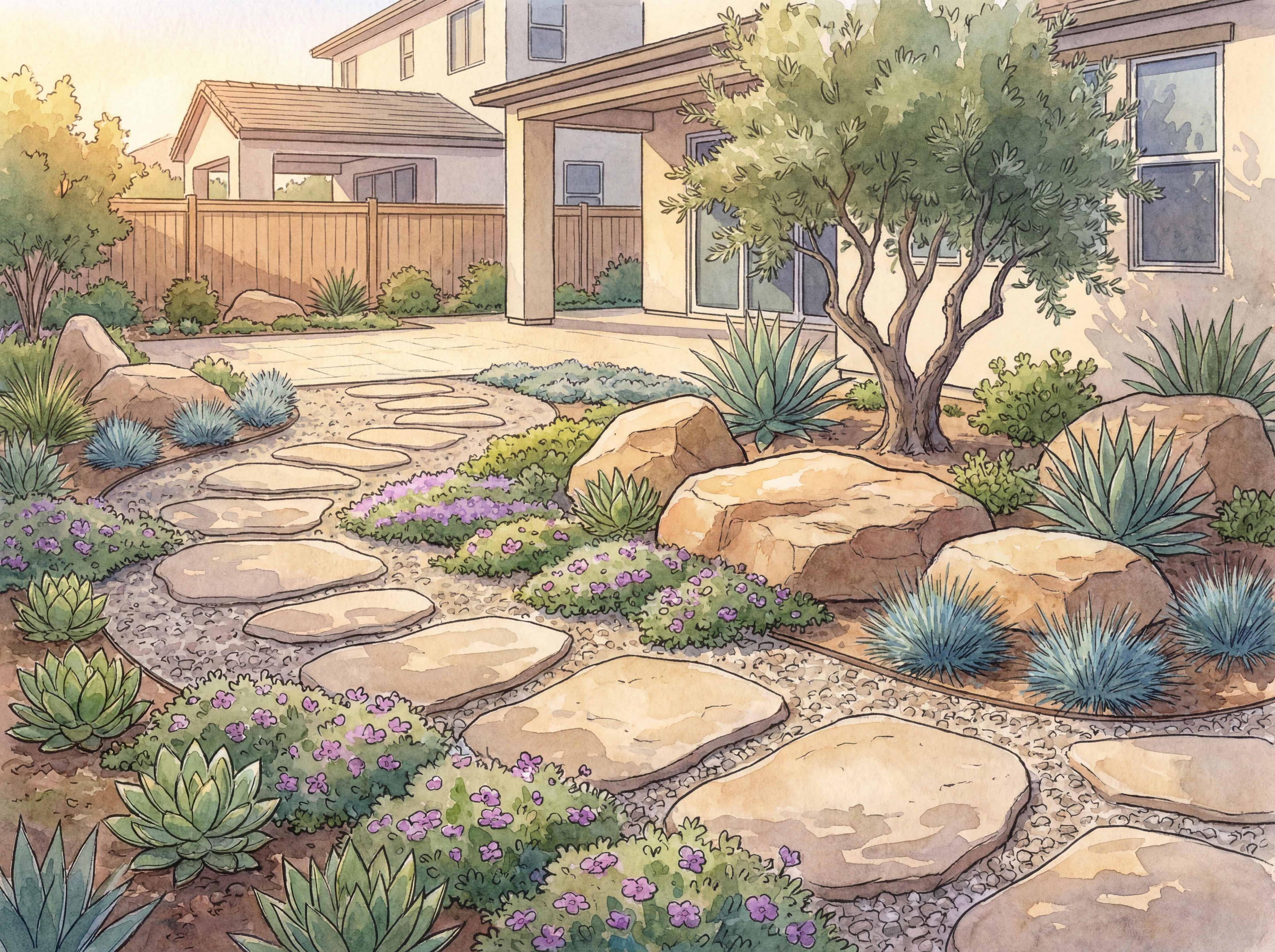
Planting ground cover successfully in Southern California comes down to three fundamentals: proper spacing, good soil preparation, and establishing a watering schedule that transitions from frequent to minimal over the first growing season. Get these right, and your ground cover will reward you with steady, reliable coverage.
Choosing the right time to plant
The ideal planting window for ground covers in Southern California is fall through early spring, roughly October through March. Planting during the cooler, wetter months gives roots time to establish before summer heat arrives. Fall planting is especially advantageous because plants benefit from winter rains and have a full growing season ahead to spread before their first dry summer.
If you are planting in spring or early summer, plan for more frequent irrigation during the first few months. Avoid planting in the peak of summer heat (July through September) if possible, as the stress on new transplants is significantly higher and establishment is slower.
Soil preparation
Before planting, prepare the soil by removing all existing grass or weeds. Amend the soil with two to three inches of quality compost, working it into the top six inches. This improves drainage, adds nutrients, and gives your new plants the best possible start.
For native California ground covers, go lighter on amendments. Most natives actually prefer lean, well-drained soil and can struggle in overly rich conditions. A thin layer of compost (one inch or less) is usually sufficient.
"Put some dirt in your hand and squeeze it to determine where it lies between the textures of pure clay and pure sand. You want a healthy mix of both," says Joanne Crawford-Dunér, Master Gardener, University of California Cooperative Extension Master Gardeners of Orange County.
Ground cover plants that work best in full sun
—Creeping Thyme (Thymus serpyllum)
—Kurapia (Lippia nodiflora)
—Dymondia (Dymondia margaretae)
—Lippia (Phyla nodiflora)
—Lantana (Lantana montevidensis)
Round cover plants that work best in shade
—Wild Ginger (Asarum caudatum)
—Baby Tears (Soleirolia soleirolii)
—Corsican Mint (Mentha requienii)
—Native Ferns (Various species)
Best native California ground covers
—California Fuchsia (Epilobium canum)
—Yarrow (Achillea millefolium)
—Creeping Sage (Salvia sonomensis)
—Blue-Eyed Grass (Sisyrinchium bellum)
