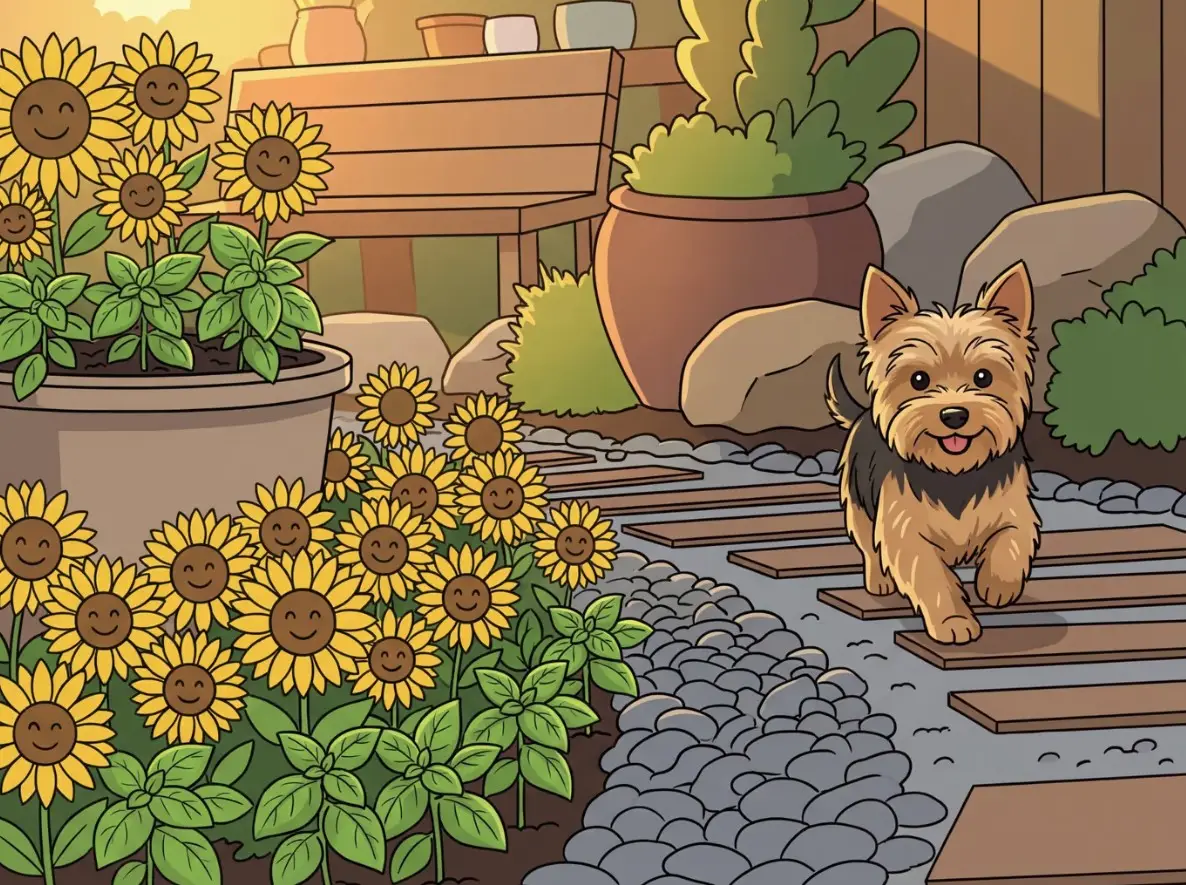
With thoughtful planning, your yard can be a place where beauty, functionality, and comfort all come together. From pet-safe plants and durable ground coverings to cozy gathering areas and room to play, it’s possible to design a landscape that works for both people and pets.
Many of the most popular drought-tolerant plants sold at Southern California nurseries, including sago palm, oleander, and lantana, are among the most toxic to both dogs and cats. A pet-safe yard starts with knowing which plants to remove and which to choose instead.
Pet friendly landscaping and water-wise landscaping overlap almost completely: the safest plants for pets are California natives and Mediterranean species that thrive on minimal water, and many of the best pet-safe ground covers qualify for IRWD turf removal rebates at $2 per square foot.
Designing your yard in zones (play, rest, potty, protected garden) keeps pets happy, plants intact, and maintenance manageable, whether you share your yard with dogs, cats, or both.
What is petscaping?
Petscaping is landscape design that places pets at the center of the plan from the very beginning. It combines thoughtful plant choices, durable materials, and smart layouts to create an outdoor space that works beautifully for both animals and people. The goal is simple: a yard that is safe for pets, welcoming for your family, and designed to be enjoyed every day.
At its best, petscaping brings together three priorities: protecting animals from harmful plants, chemicals, and environmental hazards; creating a functional and visually beautiful outdoor living space; and designing with the water realities of a Mediterranean climate in mind. The result is a landscape where pets can explore freely, people can relax comfortably, and the entire yard thrives together.
In Southern California specifically, petscaping carries extra opportunity for three reasons.
First, outdoor living is year-round here. Dogs and cats in Orange County get to enjoy the yard far more than pets in regions with harsh winters or heavy rain seasons. Petscaping makes sure every hour your pet spends outside is as safe as it is enjoyable, because a yard they can access 365 days a year deserves 365-day-a-year peace of mind.
Second, Southern California’s drought-tolerant landscaping movement has opened up a world of beautiful, water-wise possibilities and petscaping helps you navigate them with confidence. The push to replace thirsty lawns with smart, sustainable alternatives is exactly the right instinct. Petscaping simply adds one more layer of intention to that process, so you can embrace water-wise design knowing your choices work for your whole family, pets included. Think of it as the cross-reference your garden center wishlist has been missing.
Third, Southern California’s rich wildlife is part of what makes this region so special and a well-designed petscape helps your yard work with that environment, not against it. A thoughtful petscape takes that into account, creating a backyard that feels like a true sanctuary: beautiful, sustainable, and genuinely protective of the animals you love most.
What ground covers and surfaces work best for pets?
Ground cover is the decision that affects daily life with a pet more than any other landscape choice. Your dog runs on it, rolls in it, and uses it as a bathroom. Your cat walks across it on patrol. And in Southern California, traditional turf grass meets those demands at a staggering water cost: approximately 44 gallons per square foot per year.
The good news is that several pet-safe, traffic-durable ground covers are also among the best lawn replacements for our climate. Many qualify for IRWD rebates, meaning the switch to a pet-safe yard can offset the cost of conversion.
Kurapia is emerging as one of the most popular choices for pet owners in Southern California. It forms a dense, soft mat that handles heavy paw traffic, requires 60 percent less water than traditional turf, and stays green year-round. It recovers from wear patterns and tolerates urine better than most alternatives.
Decomposed granite is the go-to for dedicated play and potty zones. It stays significantly cooler than concrete or synthetic turf, drains quickly, and costs far less than hardscape. A properly compacted DG surface in a warm gold or natural tan tone looks clean and intentional.
Synthetic turf deserves careful consideration. It is durable and requires no water, but it comes with several tradeoffs in Southern California. Surface temperatures can exceed 150 degrees Fahrenheit on sunny days that are hot enough to burn paw pads and make the space uncomfortable for people and pets.
There are also environmental concerns. Most synthetic turf is made from plastic fibers and infill materials that can break down over time. Small fragments can wash into storm drains during rain, eventually reaching creeks, rivers, and coastal waters as microplastics that persist in the environment for decades.
Synthetic turf also does not qualify for rebates from Irvine Ranch Water District (IRWD), which prioritizes landscape conversions that support water efficiency while maintaining healthy soil and local ecosystems.

How does water-wise landscxaping connect to pet safety?
Here is the overlap that makes petscaping particularly compelling in Southern California: the Venn diagram of “plants that are safe for pets” and “plants that thrive with minimal water” is nearly a circle.
California natives like Cleveland sage, California buckwheat, deer grass, California fuchsia, manzanita, and matilija poppy are all non-toxic to both dogs and cats. They are also the plants that evolved for this exact climate, requiring little to no supplemental irrigation once established. Mediterranean herbs like rosemary, thyme, sage, and oregano are non-toxic, drought-tolerant, and edible. The ground covers that handle pet traffic best, kurapia and creeping thyme among them, are also among the most water-efficient lawn replacements available.
This alignment means that a petscaping project is not an added expense on top of a water-wise conversion. It is the same conversion, informed by one additional filter.
The IRWD Rebate Connection
Irvine Ranch Water District’s turf removal rebate program currently offers $2 per square foot for replacing traditional lawn with approved water-wise alternatives. Many of the plants and ground covers recommended throughout this guide qualify. That means a 500-square-foot lawn replacement could return $1,000 in rebates, often enough to cover materials for the entire pet-safe conversion.
The key requirements: you must apply for pre-approval before starting your project, the replacement must be living plant material or permeable hardscape (synthetic turf does not qualify), and the area must have been actively irrigated turf grass. Visit Yardtopia.com for current program details, eligibility requirements, and application forms.
Rebate-eligible plants that are also pet-safe include:
Building a pet-safe yard and building a water-wise yard are, in most cases, the same project. Your Yardtopia can be both at once.
More information
For a deeper dive into petscaping, visit yardtopia.com.